
Commercial Interior Design Gold Coast
High-Performance Commercial Interiors on the Gold Coast
If you’re searching for Commercial Interior Design Gold Coast, you’re likely not looking for “nice finishes” alone. You’re looking for a strategic partner who understands how to shape a commercial space that performs—operationally, financially, and experientially—while reducing risk across design, approvals, documentation, tendering, and build delivery.
At Leithal Designs, we deliver architecturally-led commercial interiors for the Gold Coast and South-East Queensland, backed by deep experience across complex, high-stakes environments—workplace, hospitality, medical and wellness, and premium retail. Our approach is structured, collaborative, and engineered for buildability: we ask better questions upfront, translate vision into technical detail, and help you move from “ideas” to a confidently buildable project roadmap.
This pillar page is designed as the definitive hub for Gold Coast commercial interior design—covering industries, process, compliance, project risk, coastal context, ROI, and the practical realities that separate a smooth build from an expensive rework.
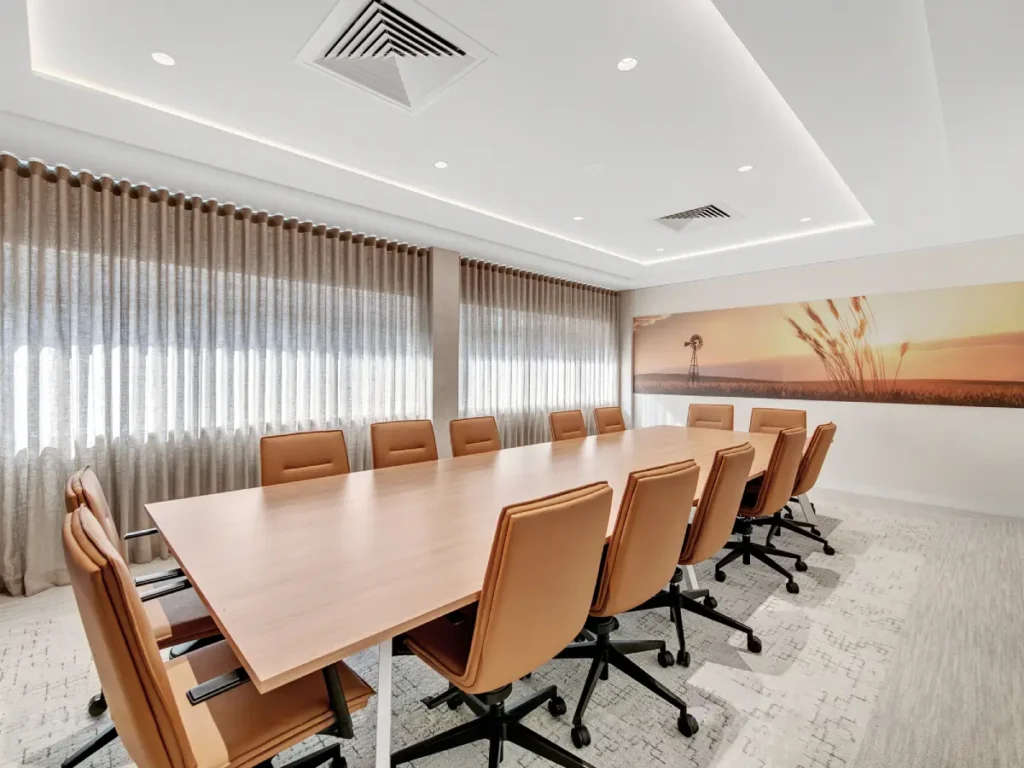
What “Commercial Interior Design” really means
Commercial interiors = performance design
True commercial interior design sits at the intersection of:
- spatial planning and workflow engineering
- brand experience and customer psychology
- services coordination and buildability
- safety, compliance, and accessibility
- documentation that builders can price and build accurately
This is where projects are won or lost. When a space is designed to “look good” but not to function, you may see the symptoms fast: bottlenecks, staff frustration, acoustic fatigue, poor storage, compliance gaps, hidden variations, and timelines that drift.
What it is not: styling-first decorating
Styling has a place—but it’s not the foundation. A styling-first approach may focus on finishes and furniture before the hard questions are answered:
- How do people movethrough the space in peak load?
- Where do staff need privacy, speed, and storage—without compromising customer experience?
- What is the building classification and change-of-use pathway?
- What must be documented for approvals, pricing, and a controlled build outcome?
Leithal Designs positions commercial interior design as interior architecture + project strategy—not decoration
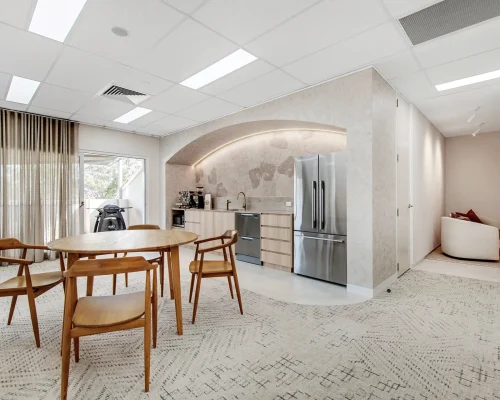
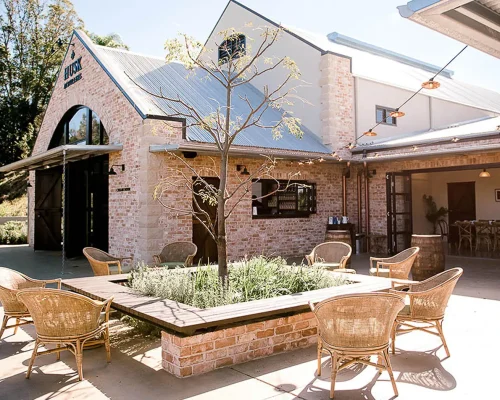
Why Gold Coast commercial projects need a different design lens
The Gold Coast is not a generic commercial market. It’s a unique blend of high-visibility lifestyle precincts, rapid business growth corridors, and premium customer expectations—often within coastal conditions that demand material discipline.
Key Gold Coast realities that affect design decisions
Coastal durability matters.Humidity, salt air, UV exposure, and high seasonal foot traffic all influence material selection, detailing, maintenance cycles, and long-term appearance.
Lifestyle brands demand emotional design.On the Gold Coast, many businesses compete on experience—how a space makes customers feel. This is especially true in hospitality, wellness, and premium retail.
Growth and churn are real.Tenancies change hands. Businesses expand. A smart fit-out anticipates flexibility: modularity, serviceability, and the ability to reconfigure without ripping everything out.
Compliance is non-negotiable.Many fit-outs involve approvals, certifications, fire services coordination, access, and health regulations. The National Construction Code (NCC)sets minimum requirements around safety, health, amenity, accessibility and sustainability, and it’s performance-based—meaning you must prove your design meets requirements, not just “looks right.”
The Leithal Designs difference: interior architecture, not decorating
Leithal Designs is a boutique architectural and interior design consultancy delivering intelligent, high-impact commercial spaces across the Gold Coast, Brisbane, and beyond. We’re built on clear communication, technical capability, and structured delivery—so the process feels as strong as the finished result.
A fit-out rarely fails because someone chose the wrong tile. It fails because:
- The brief was incomplete (assumptions everywhere)
- The site constraints weren’t understood early
- Documentation was not buildable or coordinated
- Tenders were not comparable (apples vs oranges)
- The variation risk wasn’t controlled
- Decisions were made too late (cost and time blowouts)
Leithal Designs actively solves these failure points through:
- Deep briefing and workflow analysis
- Structured decision checkpoints
- 3D modelling and technical documentation
- Coordination with relevant consultants
- Tender administration (including competitive tendering)
Sector expertise: Gold Coast commercial interiors that perform
This is where “generic design” falls apart. Each sector has different constraints, compliance concerns, and performance metrics. Below is how we approach the Gold Coast’s core commercial categories.
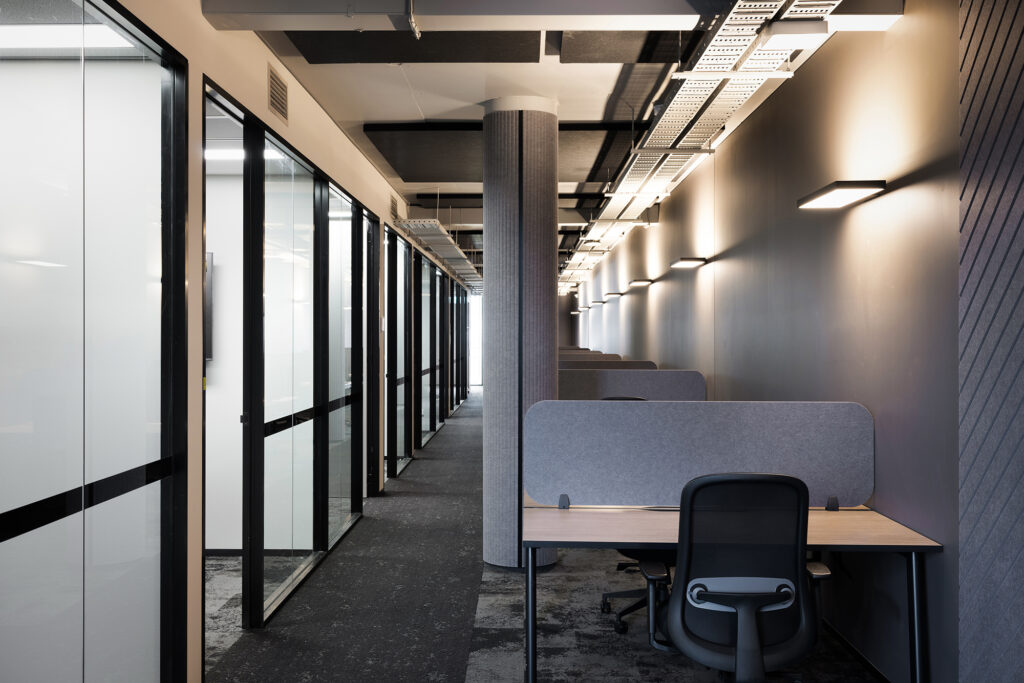
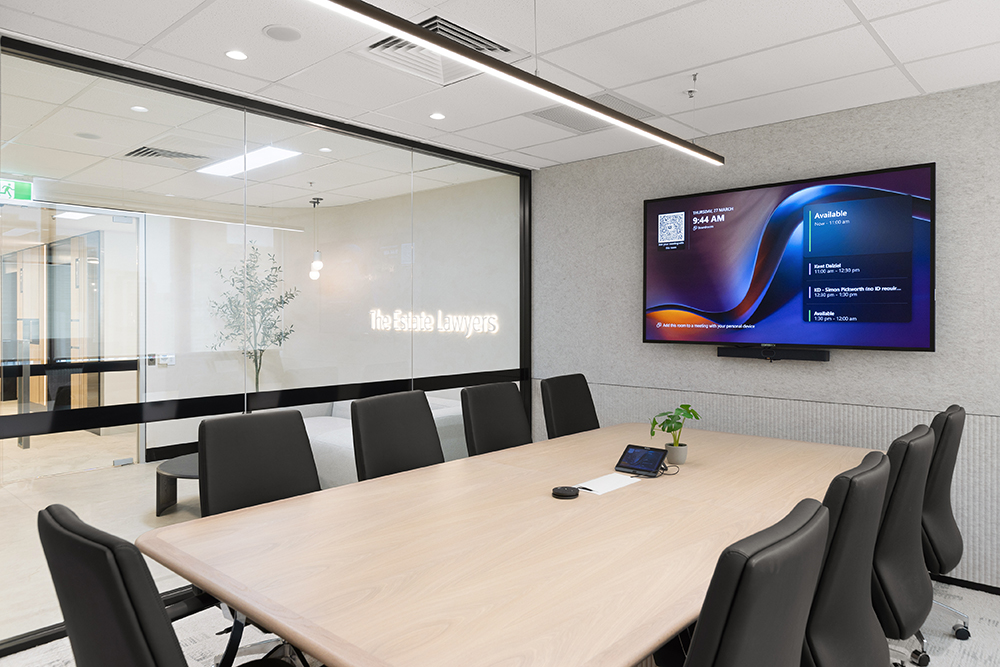
Workplace & corporate offices (Robina / Southport / CBD)
The problem
Workplaces often underperform because they’re designed around aesthetics or outdated assumptions:
- Hybrid work has changed space usage
- Meeting rooms are either overbuilt (empty) or underbuilt (constant conflict)
- Aacoustics are ignored until it’s painful
- Brand expression is superficial rather than embedded into planning
- Staff wellbeing is “added on” rather than designed in
The solution: performance-led planning + adaptable zones
A high-performing workplace typically includes:
- Clear zoning (focus, collaboration, client-facing, support)
- Acoustic strategy (not just “soft furnishings”)
- Power/data planning that supports change
- Circulation that reduces disruption
- Wellbeing design that feels natural, not forced
Gold Coast nuance:Offices that host clients often require a hospitality-grade welcome experience—particularly in Southport and Robina where corporate expectations are rising.
Boutique hospitality (cafés / bars / venues)
The problem
Hospitality fit-outs fail when “vibe” is prioritised over operations:
- Queue points and service flow aren’t engineered
- BOH is underspecified (and then reworked mid-build)
- Materials don’t survive traffic, cleaning, and humidity
- Compliance is treated as a late-stage hurdle
- Acoustic comfort is ignored (customers leave sooner)
The solution: experience + operational choreography
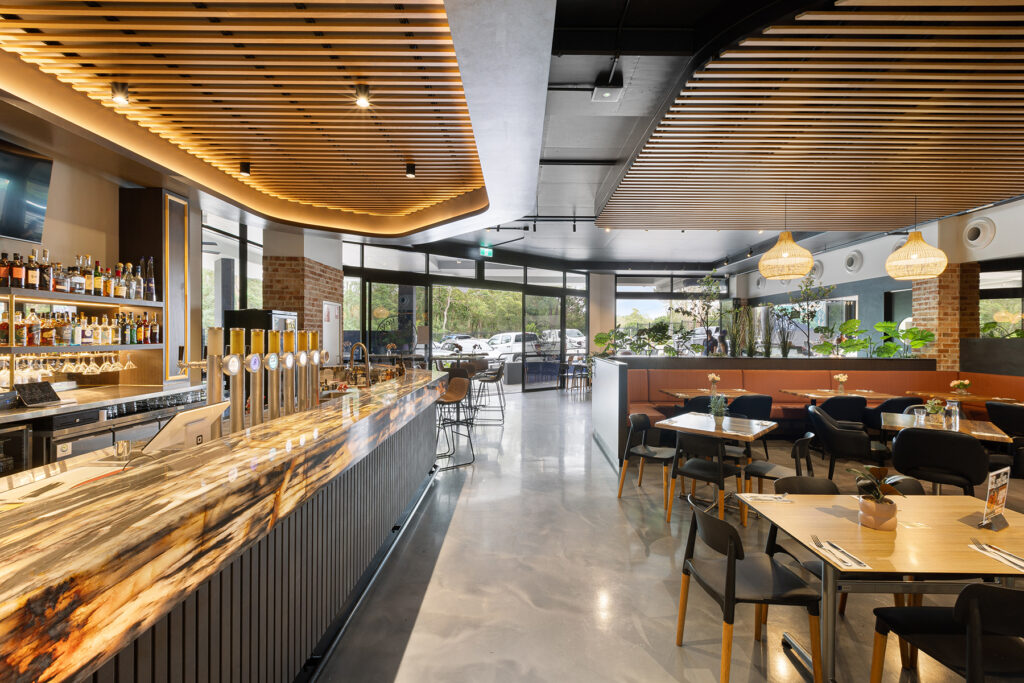
Great hospitality design on the Gold Coast blends:
- A clear customer journey (arrival → order → seating → amenities → exit)
- Sightlines that support both mood and operational control
- Service points designed to reduce wait times and staff steps
- BOH layout that supports speed, safety, and hygiene
- Durable finishes that age well
Medical & allied health (clinics / dental / wellness)
The problem
Healthcare environments carry unique risks:
- privacy and dignity requirements
- infection control and cleanability
- storage density and workflow speed
- accessibility compliance
- specialised equipment and services coordination
- patient anxiety and sensory comfort
A clinic that “looks premium” but functions poorly may reduce throughput, burn out staff, and create hidden compliance vulnerabilities.
The solution: workflow-led clinical design + calming experience
Leithal Designs approaches medical interiors by:
- mapping patient and staff flows (arrival → waiting → consult → treatment → discharge)
- controlling privacy via layout, acoustics and sightlines
- engineering storage so consumables and equipment don’t invade patient zones
- balancing sterility needs with warmth and brand trust
- coordinating documentation detail so the build is clear
Luxury retail (high-traffic, brand-driven spaces)
The problem
Retail spaces frequently struggle with:
- poor conversion flow (customers don’t intuitively move through the store)
- underperforming product visibility
- lighting that flattens texture and colour
- materials that scuff, chip, or look tired quickly
- a disconnect between brand story and physical experience
The solution: conversion-led layouts + durable brand theatre
Luxury retail design often combines:
- “decompression zone” planning at entry
- clear product hierarchy and focal points
- layered lighting strategy (ambient + task + accent)
- joinery engineered for display flexibility and service access
- material palettes that feel premium andsurvive traffic
Compliance & risk management: QBCC, NCC, Australian Standards
This section exists because sophisticated commercial clients care about one thing above everything else: certainty.
NCC: the baseline framework
The NCC is Australia’s primary technical code for buildings, setting minimum requirements for safety, health, amenity, accessibility and sustainability, and it operates through performance requirements and evidence pathways.
What this means in practice:
- You may need to confirm building classification and whether a change of use applies.
- Fire and life safety, access, egress, sanitary provisions, and other technical requirements influence layout and documentation.
- “Looks good” is irrelevant if it doesn’t meet compliance.
QBCC licensing: a trust signal that affects accountability
In Queensland, licensing scopes and categories matter. The QBCC publishes licensing guidance and scope frameworks for building design and related categories; professional teams align their contracted work with the scope they’re licensed for.
Australian Standards: where the detail lives
Many commercial environments rely on Australian Standards and aligned guidance to ensure:
- safe and maintainable material junctions
- wet area and hygiene detailing
- slip resistance considerations
- kitchen and food premises design principles (where applicable)
For hospitality and food premises, AS 4674is a key reference point (supported by Standards Australia cataloguing and multiple council/health guidance documents).
Practical takeaway:compliance is not a “final stage”. It’s a design input that shapes the plan from the beginning—especially for medical and hospitality projects.
Our methodology: Brief → Questions → Create → Review → Deliver
Leithal Designs uses a structured five-step approach that keeps projects moving, decisions clear, and documentation aligned with real-world build outcomes.
Step 1: Brief (define the outcome)
We clarify:
- business objectives (growth, experience, efficiency, compliance)
- operational realities (staff counts, peak loads, workflows)
- brand cues and target customer expectations
- site realities and constraints (tenancy conditions, services, access)
Problem solved:vague briefs create expensive assumptions.
Step 2: Questions (de-risk the decisions early)
This is where premium outcomes are protected. We pressure-test:
- What risks could derail cost, approvals, or timelines
- What flexibility the space needs over 3–5+ years
- What “non-negotiables” exist for compliance and user experience
Problem solved:surprises in design development and build.
Step 3: Create (concept + interior architecture)
We develop:
- spatial planning and zoning
- concept direction tied to brand and user experience
- early material logic (performance + maintenance + aesthetic)
- 3D modelling pathways to align stakeholders and reduce misinterpretation
Step 4: Review (iterate with discipline)
We refine with structured review points so decisions are made at the right time, not rushed at the wrong time.
Problem solved:decision chaos that causes rework.
Step 5: Deliver (documentation that builders can price accurately)
This is where projects gain financial control. Clear documentation supports:
- more accurate tender pricing
- fewer “unknowns”
Tender administration: how we help you choose the right builder
Many clients underestimate how much money is lost in a poorly run tender:
- Incomplete documentation leads to inconsistent pricing
- Builder allowances hide real cost
- Scope gaps become variations later
- You select on price, then pay for it later
Leithal Designs supports tender administration, including a competitive approach (commonly tendering to multiple builders) to improve clarity and outcome.
What ROI looks like in a well-designed commercial interior
Commercial interior design ROI is rarely one number. It’s a bundle of outcomes that compound over time:
Workplace ROI
- Improved productivity and fewer friction points
- Better staff retention and recruitment appeal
- Stronger client confidence on arrival
- Flexibility to adapt without refit costs
Hospitality ROI
- Higher table turnover (without feeling rushed)
- Longer dwell time where it matters (and faster flow where it doesn’t)
- Repeat visitation driven by comfort + identity
- Reduced operational stress due to better layout
Medical ROI
- Higher throughput through better workflow
- Improved patient trust and reduced anxiety
- Staff efficiency through integrated storage and zoning
- Fewer compliance and operational surprises
Retail ROI
- Improved conversion via better customer journey
- Stronger product visibility and lighting
- Brand positioning that supports premium pricing
- Reduced maintenance and replacement cycles

Frequently Asked Questions
What is the difference between a commercial interior designer and an interior architect?
A commercial interior designer may focus on aesthetic outcomes and furniture/finishes. An interior-architecture-led team typically addresses spatial planning, compliance inputs, technical documentation, buildability, and coordination that helps builders price your project fairly.
Do I need a designer if I already have a builder?
Often, yes—especially if you want pricing clarity and fewer variations. A designer may translate your goals into buildable documentation so your builder is pricing a defined scope rather than assumptions.
What should I prepare before the first feasibility call?
Bring any tenancy plans, basic business requirements (staff counts, service model, operating hours), inspiration references, and a realistic timeline. If you don’t have these, the call may still clarify what’s missing and what matters first.
How long does a typical Gold Coast commercial fit-out take?
Timelines vary based on approvals, documentation detail, services complexity, and builder availability. A feasibility stage helps establish a realistic programme early.
Can you work with my existing brand guidelines?
Yes—brand is an input, not an afterthought. The strongest outcomes integrate brand through planning, experience, materials, lighting, and detail—not just signage.
Do you handle approvals and coordination with consultants?
Depending on the project, coordination may include engaging or liaising with relevant consultants (e.g., certifiers, engineers) and ensuring documentation supports compliance and build outcomes.
What are the biggest causes of cost overruns in commercial fit-outs?
The most common causes are incomplete briefs, hidden site constraints, weak documentation, late-stage decision changes, and unscoped scope gaps that become variations. Early feasibility is designed to reduce these risks.
How do you design for the Gold Coast coastal environment?
By selecting materials and details suited to humidity, salt air, UV, and high foot traffic, so the space keeps its premium feel under real operating conditions.
Can you design small tenancies as well as large multi-level projects?
Yes—strategy matters at every size. Smaller sites often demand even more precision in storage, workflow, and spatial planning to avoid operational compromises.
What is tender administration and why does it matter?
Tender administration is the process of taking documented scope to builders, managers, interrogating allowances, and helping you select a builder based on clarity and confidence—not guesswork.
How many builders should be invited to tender?
Many projects benefit from competitive tendering to improve pricing transparency. The right number depends on project complexity, timeline, and market conditions.
Do hospitality venues need special compliance considerations?
Yes. Food premises design frequently aligns with hygiene, cleanability, BOH planning, and guidance that may reference standards such as AS 4674 and food safety requirements.
What are the most important design priorities for medical clinics
What is the best next step if I’m still researching?
Start with a feasibility call and a structured roadmap. It’s the fastest way to replace assumptions with clarity.